
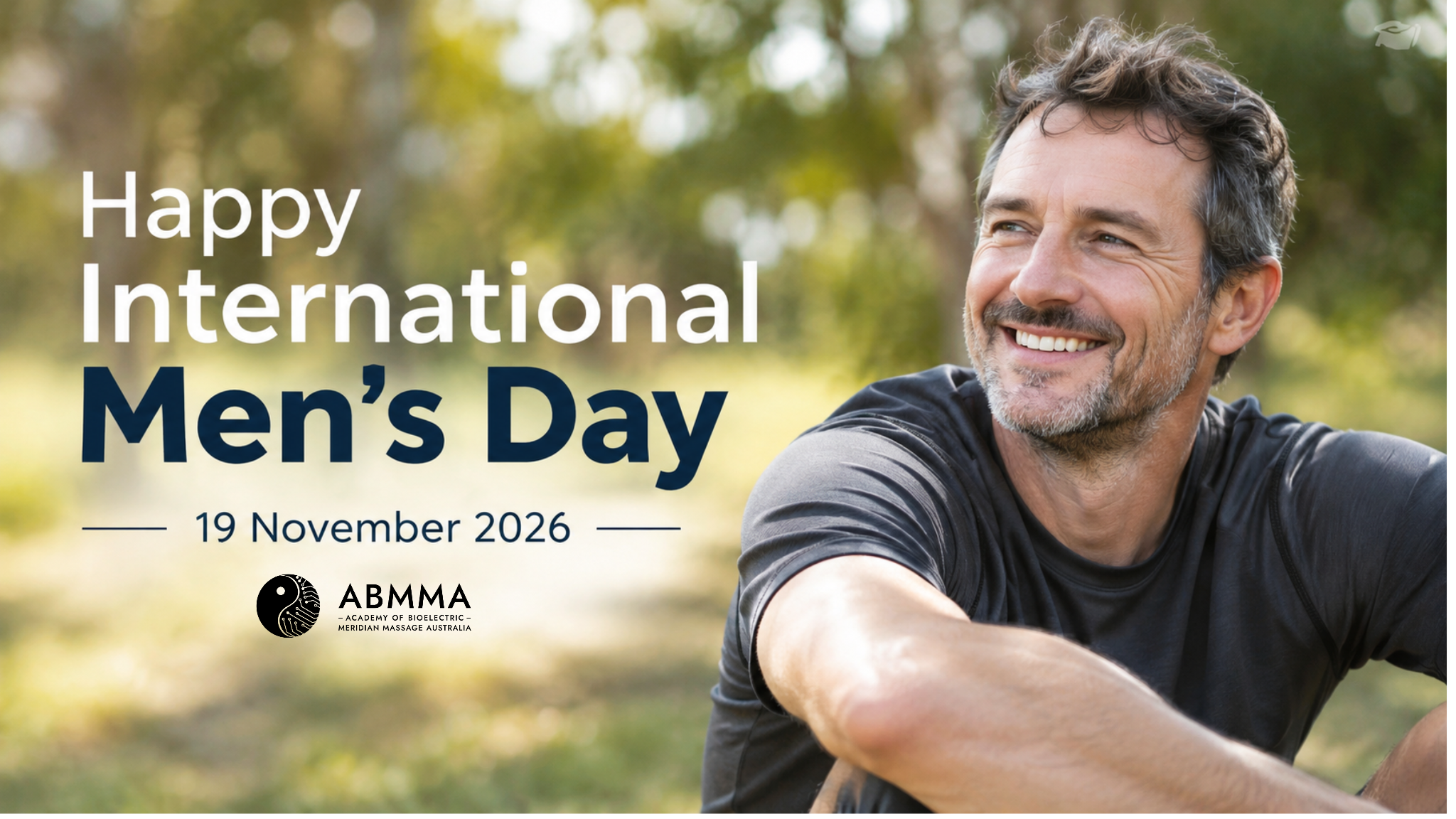
A long day at work. A restless night. Tight shoulders that never seem to relax. A backache that returns every morning.
For many men, these experiences gradually become part of everyday life. They continue working, meeting family responsibilities and getting on with things, often without stopping to consider how their bodies are responding.
But what happens when the discomfort doesn’t go away? Or when a poor night’s sleep makes everything feel harder the next day?
Stress, sleep, and physical pain are more connected than we might think. Each can influence how the body responds to discomfort, regulates pain, and recovers.
This International Men’s Day, let’s look beyond the usual conversations about men’s health and explore the connection between sleep, stress, and the nervous system.
1. When Stress Becomes Physical
Stress doesn’t always show up as worry or frustration. Sometimes, it shows up in the body.
When we experience stress, the nervous system helps prepare us to respond to challenges. Our heart rate may increase, muscles can become tense, and the body becomes more alert.
This is a normal response. However, when everyday pressures continue without enough time to recover, stress can affect sleep, energy levels, and how we experience physical discomfort.
Think about balancing work, family responsibilities, and personal commitments. Even when the day is over, switching off isn’t always easy.
Stress isn’t necessarily the cause of every ache or pain, but it can influence how the body responds to it.
2. Why Sleep and Pain Affect Each Other
Have you ever noticed that a poor night’s sleep can make an already uncomfortable day feel even harder?
You may feel more tired, less focused, and less able to cope with physical discomfort.
Sleep plays an important role in the body’s recovery processes and in regulating how we respond to pain. Research suggests that disrupted sleep can increase pain sensitivity, while persistent pain can make it harder to fall asleep and stay asleep.
This creates a difficult cycle: pain interrupts sleep, and poor sleep can make the pain feel worse.
A 2026 review by Kelleher et al. explored this two-way relationship, highlighting how sleep disturbances may contribute to the development and persistence of chronic pain.
More recently, De Freitas et al. (2026) reviewed 57 studies examining the relationship between sleep disruption, inflammation, and persistent musculoskeletal pain. Their findings highlight why sleep deserves attention as part of a broader approach to understanding pain and recovery.
These findings remind us that recovery involves more than simply addressing the area where discomfort is felt.
3. What Does the Nervous System Have to Do With Pain?
Pain is more complex than a message travelling from an injured muscle or joint to the brain.
The nervous system detects and processes information from the body, while the brain considers several influences, including previous experiences, emotions, attention and the surrounding environment.
This helps explain why two people with similar injuries may experience different levels of pain.
It also helps explain why pain can sometimes continue after an injury has healed. In some cases, the nervous system becomes more sensitive, a process known as central sensitization.
This does not mean the pain is imaginary. Persistent pain is real, even when medical imaging does not reveal an obvious cause.
Understanding this connection encourages us to look beyond the painful area and consider the wider factors influencing a person’s experience.
4. Small Steps That Can Support Better Recovery
There is no single solution that works for everyone. However, everyday habits can support physical health and recovery.
- Pay attention to recurring pain. Don’t automatically dismiss discomfort that keeps returning or interferes with daily activities.
- Make sleep a priority. Maintain a consistent sleep routine and seek professional advice if sleep difficulties continue.
- Stay physically active. Appropriate movement and exercise can support strength, mobility and general health.
- Make time to unwind. Find ways to manage everyday stress and seek support when pressures become difficult to manage.
- Know when to seek help. Persistent, worsening or unexplained pain deserves assessment by an appropriately qualified healthcare professional.
Looking after your health doesn’t mean changing everything overnight. Sometimes, it begins with recognising what your body has been telling you.
5. Understanding Pain: The Role of Practitioner Education
For manual therapists and other health practitioners, understanding pain means looking beyond the area where discomfort is felt.
A client experiencing recurring neck or shoulder pain, for example, may also be dealing with disrupted sleep, ongoing stress, or changes in daily activity. Recognising these factors can help practitioners develop a better understanding of the client’s experience and make more informed decisions about appropriate care.
This is where education in pain neuroscience becomes valuable.
At the Academy of Bioelectric Meridian Massage Australia (ABMMA), practitioner education includes Bioelectric Meridian Therapy (BMT) training, alongside specialist learning opportunities such as the Intro to Pain Neuroscience short course.
The short course explores the science of pain and its application in therapy, helping practitioners develop a deeper understanding of pain and its relevance to their professional practice.
This knowledge encourages a more considered approach, where understanding the individual is just as important as understanding the technique. It also reinforces the importance of appropriate treatment decisions and recognising when further healthcare assessment may be needed.
A Thought for International Men’s Day
Looking after your health doesn’t have to begin with a major lifestyle change.
It might mean getting help for the pain you’ve been ignoring, making sleep a priority, or finally acknowledging that you haven’t been feeling your best.
Men’s health deserves more than an occasional conversation. It deserves attention throughout the year, without judgment or the expectation to simply push through discomfort.
This November 19, let’s encourage more open conversations about physical health, pain, sleep, and recovery.
Because taking care of yourself isn’t a sign of weakness. It’s an important part of looking after your future.
References
- De Freitas, E. M., Silva, A., & Esteves, A. M. (2026). Sleep, inflammation, and pain in musculoskeletal rehabilitation: A structured integrative review of neurobiological mechanisms and non-pharmacological pain management strategies. Pain Management. Advance online publication. https://doi.org/10.1080/17581869.2026.2748285
- Kelleher, E. M., Wall, A., Seymour, B., & Irani, A. (2026). Why sleep matters in chronic pain: Evidence across the lifespan. eBioMedicine, 125, Article 106158. https://doi.org/10.1016/j.ebiom.2026.106158
- Mallari, P., Gupta, A., Taulier, T., & Kamal, M. A. (2025). Complementary role of electro-acupuncture and ABMMA-bioelectric meridian therapy in anxiety management. https://www.confmeets.com/journals/jppc/articles/jppc-25-9013-1.pdf
- Mallari, P., Taulier, T., & Kamal, M. A. (2025). A Comprehensive Mini-Review on the Understanding of Electrotherapy for Pain Management: An Introduction to ABMMA-BMT. Current Pharmaceutical Biotechnology.
- Mallari P, Taulier T, Kamal MA. Recovery From Long COVID: The Role of Bioelectric Meridian Therapy in Restoring Health and Well-Being. Cureus. 2024 Dec 23;16(12).
- Praveen, Mallari & Gupta, Aakarshi & Taulier, Tracy & Kamal, Mohammad. (2025). Introducing ABMMA bioelectric meridian therapy (BMT): A holistic path to wellness. Global Journal of Basic Science. 1. 1-5. 10.63454/jbs20000047.
- Gupta, A., Mallari, P., Taulier, T., & Kamal, M. A. (2025). Electrical stimulation: Biological insights and therapeutic applications. Global Translational Medicine. https://doi.org/10.36922/gtm.7774
- Improvement in quality of life and speech: Case study of a head and neck cancer patient using manual lymphatic drainage and bioelectric massage therapy https://woundsinternational.com/journal-articles/improvement-in-quality-of-life-and-speech-case-study-of-a-head-and-neck-cancer-patient-using-manual-lymphatic-drainage-and-bioelectric-massage-therapy/
- Is manual lymphatic drainage with bio-electric massage therapy a good treatment combination for lymphoedema and lipoedema? A case study https://woundsinternational.com/journal-articles/is-manual-lymphatic-drainage-with-bio-electric-massage-therapy-a-good-treatment-combination-for-lymphoedema-and-lipoedema-a-case-study/
- Bioelectrical Meridian Therapy (BMT) is safe for the therapists and pain-free participants. https://static.wixstatic.com/ugd/3b9e62_3e3b1ee727dc4137a7bff6b39caac910.pdf
Disclaimer: This article is intended for general educational purposes and does not replace individual medical advice, diagnosis or treatment. Persistent, worsening or unexplained pain should be assessed by an appropriately qualified healthcare professional.