
Why Are So Many People Living With Pain That Doesn’t Show Up on a Scan?
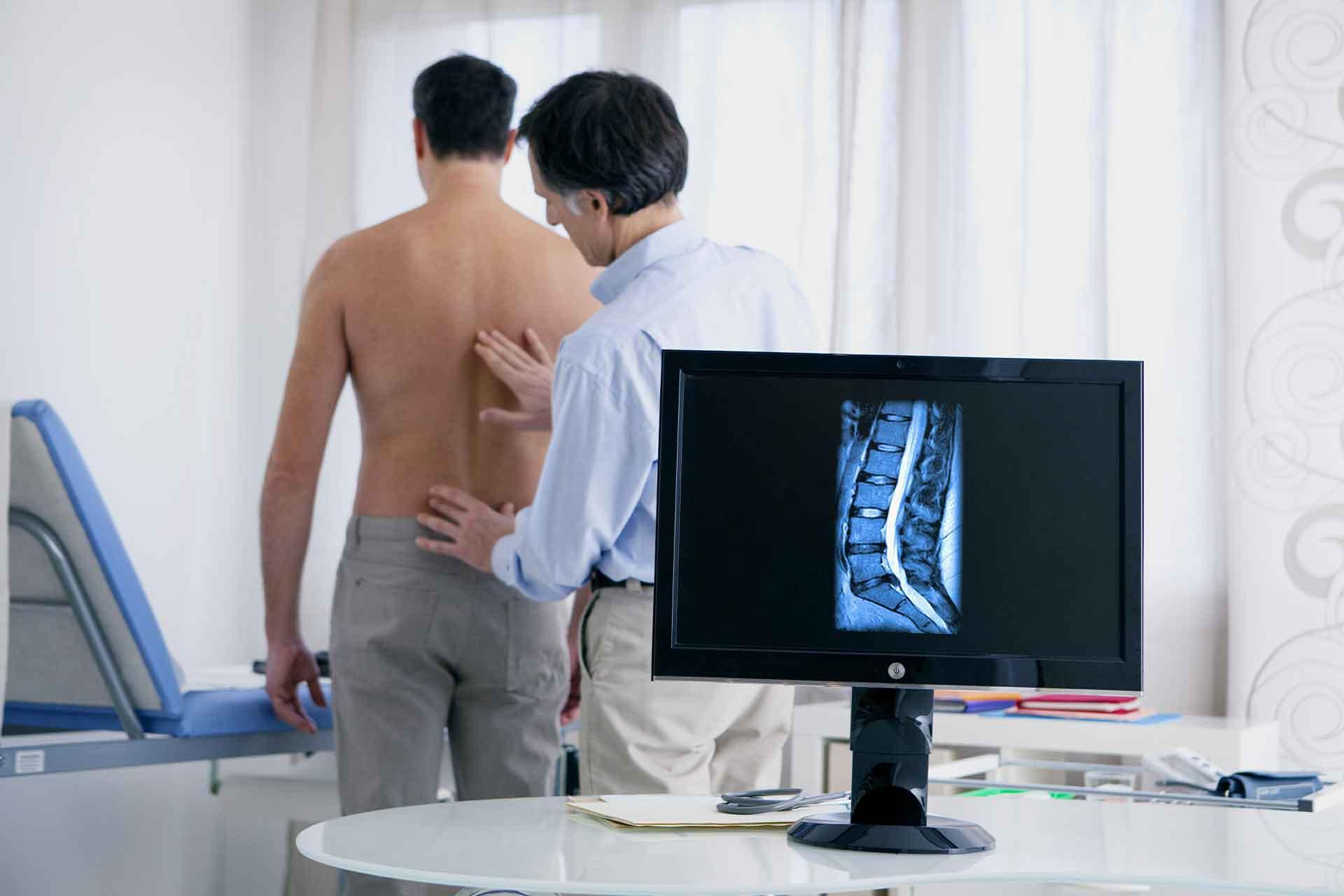
“Your scan looks normal.”
For some people, those words bring relief.
For others, they can be frustrating.
Because the pain is still there.
Maybe your back hurts when you get out of bed. Your knee aches halfway through a walk. Your neck feels tight by the end of the day. Or you’ve been dealing with discomfort for months without a clear explanation.
So you start wondering:
If the scan looks fine, why does it still hurt?
The answer isn’t that your pain isn’t real. And it isn’t that scans aren’t useful. Imaging can be extremely important for identifying injuries, disease and structural changes.
But sometimes, a picture is only one part of the story.
When the scan and the symptoms don’t match
It’s easy to assume that pain and physical damage should always match.
If something hurts, something must be damaged.
And if nothing obvious is damaged, there shouldn’t be pain.
But the relationship isn’t always that simple.
A 2015 systematic review examined spinal imaging from 33 studies involving 3,110 people without back pain. Researchers found that changes commonly associated with back problems were also common in people who felt perfectly well.
Disc degeneration, for example, was found in 37% of people in their 20s and 96% of people in their 80s. Disc bulges were also frequently seen in people without symptoms (Brinjikji et al., 2015).
That doesn’t mean these findings are unimportant.
It means they need context.
A scan can show us what a structure looks like. It cannot, by itself, tell us exactly how that person should feel.
So, where does the pain come from?
Pain isn’t simply a direct measurement of tissue damage.
The nervous system plays an important role in detecting, processing, and responding to information from the body.
Think about touching something hot. Your nervous system detects a potential threat and helps you pull your hand away. Pain gets your attention and encourages protection.
Persistent pain can be more complicated.
The nervous system can become more sensitive, while previous injuries, movement, stress, sleep, and other factors can influence how pain is experienced.
That doesn’t make the pain imaginary.
It makes pain more complex than a picture on a screen.
Two people can have similar findings on a scan and experience very different symptoms.
What does newer research tell us?
The relationship between imaging findings and pain is still being studied.
A 2025 systematic review examined whether lumbar MRI findings relate to pain and disability, including whether upright MRI might better reflect a person’s symptoms. The researchers found that upright and lying-down MRI can produce different findings, but there isn’t enough evidence to conclude that upright MRI reliably correlates better with pain or disability (Doktor et al., 2025).
The takeaway isn’t that scans don’t work.
It’s that the image needs context.
Symptoms, history, and physical assessment can all contribute to understanding what someone is experiencing.
The scan matters. But so does the person looking back at you from the other side of it.
Your body may also be adapting
When something hurts, we naturally change how we move.
We protect the painful area. We tense certain muscles. We avoid movements that feel uncomfortable. Sometimes another part of the body starts doing more work.
These adaptations can become part of the picture.
That’s why a good assessment can look beyond simply asking:
“Where does it hurt?”
It may also consider:
- How are you moving?
- What makes the symptoms better or worse?
- Has your movement changed?
- When did this begin?
- How is it affecting everyday life?
The painful area matters.
But it may not explain everything on its own.
Looking beyond the painful spot
This broader way of thinking is relevant to ABMMA’s approach to Bioelectric Meridian Therapy (BMT).
BMT is taught as a complementary therapy that combines bioelectric stimulation with hands-on techniques within a practitioner-led approach. It isn’t presented as a replacement for medical diagnosis, imaging, or appropriate healthcare.
Instead, it reflects a simple idea:
Don’t just chase the symptom. Understand the person experiencing it.
Bioelectricity itself is not mysterious. The body uses electrical activity and chemical signalling as part of how nerves, cells and tissues communicate. Understanding these processes is an area of ongoing scientific research, including within the broader field of bioelectric medicine.
For ABMMA, that interest also extends into practitioner-guided self-care. The UNI-P.R.O. ACTIVE is designed for use outside the clinic as part of an individual’s care routine, supporting continuity between professional appointments rather than replacing professional assessment.
Maybe the better question is…
When a scan comes back normal, it can feel like the conversation should be over.
It doesn’t have to be.
Perhaps the better question isn’t:
“Why didn’t my scan find the pain?”
Maybe it’s:
“What else do we need to understand about my body?”
That might mean looking at movement, muscle function, nervous-system responses, daily habits, previous injuries or other factors that could be relevant.
It doesn’t mean ignoring the scan.
It means not ignoring the person, either.
Sometimes, understanding pain begins when we stop searching for one perfect answer and start looking at the whole picture.
A note on pain
Persistent or unexplained pain should not be self-diagnosed. Imaging and medical assessment can be important when symptoms suggest a serious underlying condition or when further investigation is clinically appropriate.
This article is for general education and does not replace individual medical advice, diagnosis or treatment.
References
Brinjikji, W., Luetmer, P. H., Comstock, B., Bresnahan, B. W., Chen, L. E., Deyo, R. A., Halabi, S., Turner, J. A., Avins, A. L., James, K., Wald, J. T., Kallmes, D. F., & Jarvik, J. G. (2015). Systematic literature review of imaging features of spinal degeneration in asymptomatic populations. American Journal of Neuroradiology, 36(4), 811–816. https://doi.org/10.3174/ajnr.A4173
Doktor, K., Christensen, H. W., Jensen, T. S., Hancock, M. J., Vach, W., & Hartvigsen, J. (2025). Upright versus recumbent lumbar spine MRI: Do findings differ systematically, and which correlates better with pain? A systematic review. The Spine Journal, 25(8), 1719–1750. https://doi.org/10.1016/j.spinee.2024.12.034
Mallari, P., Gupta, A., Taulier, T., & Kamal, M. A. (2025). Complementary role of electro-acupuncture and ABMMA-bioelectric meridian therapy in anxiety management. https://www.confmeets.com/journals/jppc/articles/jppc-25-9013-1.pdf
Mallari, P., Taulier, T., & Kamal, M. A. (2025). A Comprehensive Mini-Review on the Understanding of Electrotherapy for Pain Management: An Introduction to ABMMA-BMT. Current Pharmaceutical Biotechnology.
Mallari P, Taulier T, Kamal MA. Recovery From Long COVID: The Role of Bioelectric Meridian Therapy in Restoring Health and Well-Being. Cureus. 2024 Dec 23;16(12).
Praveen, Mallari & Gupta, Aakarshi & Taulier, Tracy & Kamal, Mohammad. (2025). Introducing ABMMA bioelectric meridian therapy (BMT): A holistic path to wellness. Global Journal of Basic Science. 1. 1-5. 10.63454/jbs20000047.
Gupta, A., Mallari, P., Taulier, T., & Kamal, M. A. (2025). Electrical stimulation: Biological insights and therapeutic applications. Global Translational Medicine. https://doi.org/10.36922/gtm.7774
Improvement in quality of life and speech: Case study of a head and neck cancer patient using manual lymphatic drainage and bioelectric massage therapy https://woundsinternational.com/journal-articles/improvement-in-quality-of-life-and-speech-case-study-of-a-head-and-neck-cancer-patient-using-manual-lymphatic-drainage-and-bioelectric-massage-therapy/
Is manual lymphatic drainage with bio-electric massage therapy a good treatment combination for lymphoedema and lipoedema? A case study https://woundsinternational.com/journal-articles/is-manual-lymphatic-drainage-with-bio-electric-massage-therapy-a-good-treatment-combination-for-lymphoedema-and-lipoedema-a-case-study/
Bioelectrical Meridian Therapy (BMT) is safe for the therapists and pain-free participants. https://static.wixstatic.com/ugd/3b9e62_3e3b1ee727dc4137a7bff6b39caac910.pdf