
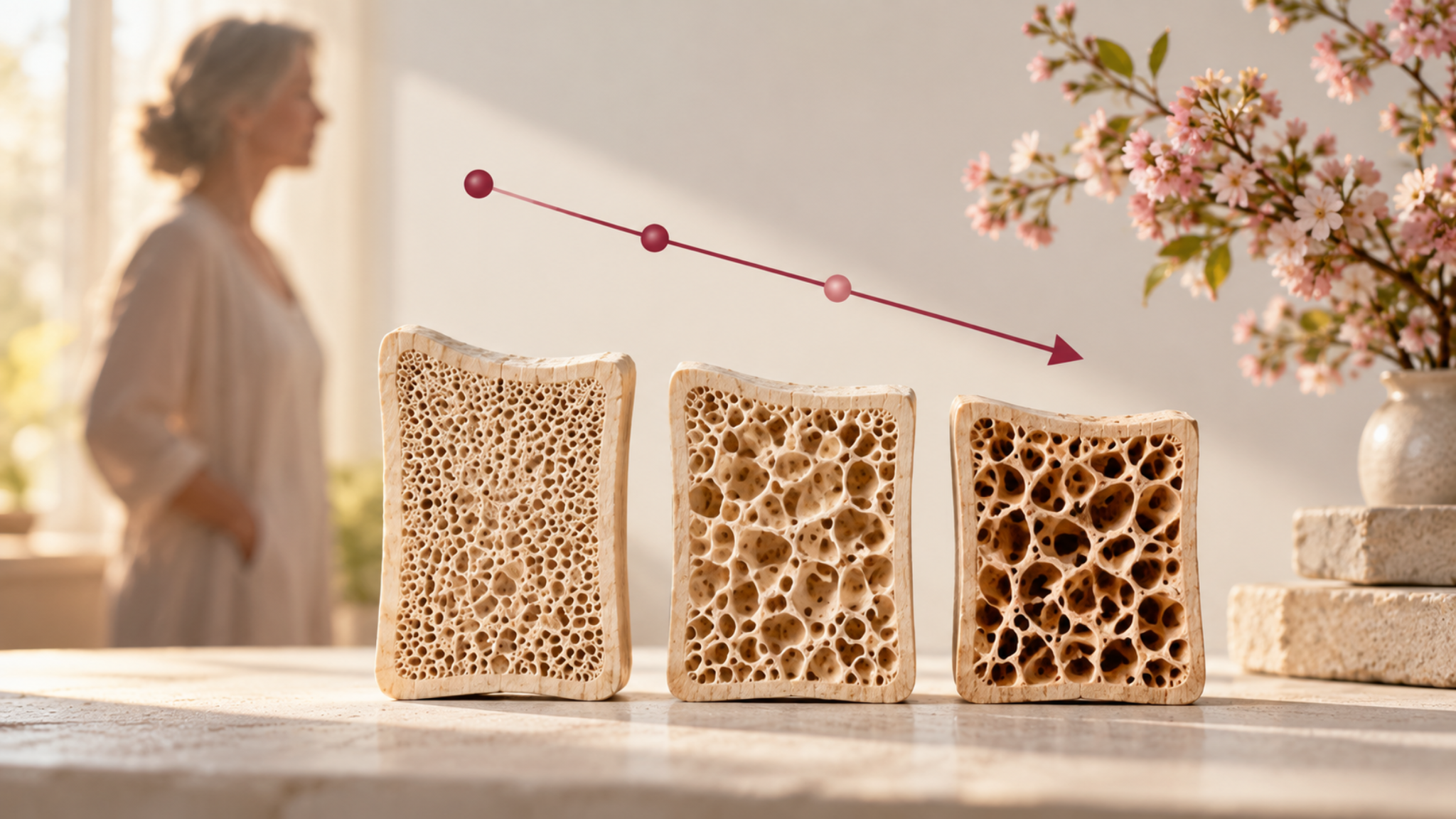
Understanding how changing hormone levels affect bone density, fracture risk, and long-term health.
Menopause brings changes that extend far beyond the menstrual cycle. While hot flashes, disrupted sleep, and mood changes often receive the most attention, another important change is happening quietly: the way the body maintains its bones.
As estrogen levels decline, bone loss can accelerate, increasing the risk of osteoporosis over time. Because this process usually happens without obvious symptoms, many women may not realize their bone health needs attention until a fracture occurs.
Understanding this connection can help women make informed decisions about their health during midlife and beyond.
How Does Estrogen Protect Your Bones?
Bone is living tissue. Throughout life, the body continuously breaks down old bone and replaces it with new bone through a process known as bone remodeling.
Estrogen plays an important role in maintaining this balance. It helps regulate the cells responsible for breaking down bone, allowing bone formation to keep pace with bone loss.
During perimenopause and menopause, estrogen levels fluctuate and eventually decline. As a result, bone breakdown can begin to outpace bone formation, leading to a reduction in bone mineral density and changes in bone strength (de Villiers, 2024).
This does not mean every woman will develop osteoporosis. However, the hormonal changes associated with menopause are an important reason to pay closer attention to bone health, particularly when other risk factors are present.
Why Does Bone Loss After Menopause Matter?
Osteoporosis is a condition in which bones become weaker and more likely to fracture. It can affect different parts of the skeleton, including the hip, spine, and wrist.
One of its greatest challenges is that bone loss is usually painless.
A woman may continue working, exercising, and managing everyday activities without knowing that her bone density has decreased.
The risk is influenced by more than menopause alone. Age, family history, low body weight, smoking, certain medications, inadequate calcium or vitamin D intake, and previous fractures can all contribute.
This is why bone health should not be judged by how strong or healthy someone feels. A healthcare professional can assess individual risk and recommend a bone density scan or other investigations when appropriate.
What Can Women Do to Support Their Bone Health?
Supporting bone health involves more than one dietary change or exercise routine. A combination of good nutrition, regular physical activity, and awareness of individual risk factors can help maintain bone strength and reduce the risk of fractures. Small, consistent steps can make a difference over time. Here are a few practical ways to get started.
1. Make nutrition a priority
Calcium and vitamin D are essential for maintaining healthy bones. Include calcium-rich foods such as dairy products, calcium-fortified alternatives, tofu, and suitable leafy greens. Vitamin D supports calcium absorption, and supplementation may be appropriate for some women depending on their needs and medical advice.
Adequate protein and a balanced diet also help support overall musculoskeletal health.
2. Keep moving
Weight-bearing activities, such as walking, and appropriate resistance exercises can help maintain bone strength and muscle function. Balance training can also improve stability and help reduce the risk of falls.
The right exercise program depends on a person’s health, fitness, and fracture risk. Women with osteoporosis or previous fragility fractures should seek guidance from a qualified healthcare professional before beginning unfamiliar or high-impact activities.
3. Pay attention to fall prevention
Strong muscles and good balance help us move confidently, but falls become more concerning when bones are fragile. Appropriate footwear, a safer home environment, regular vision checks, and exercises suited to individual ability can all contribute to reducing risk.
4. Know when to seek medical advice
Women approaching or experiencing menopause can discuss their bone health and individual risk factors with their healthcare provider. A bone density assessment may be recommended depending on age, medical history, and other risk factors.
For women at increased risk, lifestyle measures alone may not be sufficient. Medical treatments are available to reduce bone loss and fracture risk, and the most appropriate approach depends on individual circumstances.
What Does the Research Tell Us?
A review published in Best Practice & Research Clinical Endocrinology & Metabolism highlights the relationship between menopause, estrogen, and long-term bone health.
De Villiers (2024) explains that bones constantly renew themselves through a process called bone remodeling. As estrogen levels decline during and after menopause, bone breakdown can outpace new bone formation, reducing bone density and increasing the risk of osteoporosis and fractures.
Although bone loss does not always lead to osteoporosis, menopause is an important time to prioritize bone health. Adequate nutrition, regular physical activity, individual risk assessment, and medical advice when needed can help women make informed decisions about prevention and care.
How Does This Relate to ABMMA?
Emerging research into electrical stimulation offers an interesting perspective on the relationship between bioelectricity and bone health. Electrical signals can influence cellular processes involved in tissue repair and regeneration. In their review, Gupta et al. (2025) discuss research suggesting that electrical stimulation can influence osteoblast activity and the development of bone-forming cells, highlighting its potential relevance to bone regeneration.
These findings provide a scientific basis for further investigating how electrical stimulation may contribute to bone-related processes. However, different stimulation methods can produce different biological effects, and further research is needed to establish whether these findings apply to ABMMA’s Bioelectric Meridian Therapy (BMT) and whether it can provide measurable benefits for bone health.
At ABMMA, this distinction matters: emerging research should be understood for its potential while remaining guided by clinical evidence. BMT should not be presented as a treatment for osteoporosis or as a substitute for established approaches to maintaining bone health.
A Thought Worth Remembering
Menopause is a natural stage of life, but the changes it brings deserve attention. Bone loss may happen quietly, yet taking practical steps to support bone health does not need to be complicated.
A balanced diet, appropriate movement, awareness of personal risk factors, and timely medical advice can all play a role in protecting bone health.
This World Osteoporosis Day, October 20, 2026, let bone health become part of the conversation about women’s health after menopause, not something considered only when a problem appears.
References:
- de Villiers, T. J. (2024). Bone health and menopause: Osteoporosis prevention and treatment. Best Practice & Research Clinical Endocrinology & Metabolism, 38(1), 101782. https://doi.org/10.1016/j.beem.2023.101782
- Mallari, P., Gupta, A., Taulier, T., & Kamal, M. A. (2025). Complementary role of electro-acupuncture and ABMMA-bioelectric meridian therapy in anxiety management. https://www.confmeets.com/journals/jppc/articles/jppc-25-9013-1.pdf
- Mallari, P., Taulier, T., & Kamal, M. A. (2025). A Comprehensive Mini-Review on the Understanding of Electrotherapy for Pain Management: An Introduction to ABMMA-BMT. Current Pharmaceutical Biotechnology.
- Mallari P, Taulier T, Kamal MA. Recovery From Long COVID: The Role of Bioelectric Meridian Therapy in Restoring Health and Well-Being. Cureus. 2024 Dec 23;16(12).
- Praveen, Mallari & Gupta, Aakarshi & Taulier, Tracy & Kamal, Mohammad. (2025). Introducing ABMMA bioelectric meridian therapy (BMT): A holistic path to wellness. Global Journal of Basic Science. 1. 1-5. 10.63454/jbs20000047.
- Gupta, A., Mallari, P., Taulier, T., & Kamal, M. A. (2025). Electrical stimulation: Biological insights and therapeutic applications. Global Translational Medicine. https://doi.org/10.36922/gtm.7774
- Improvement in quality of life and speech: Case study of a head and neck cancer patient using manual lymphatic drainage and bioelectric massage therapy https://woundsinternational.com/journal-articles/improvement-in-quality-of-life-and-speech-case-study-of-a-head-and-neck-cancer-patient-using-manual-lymphatic-drainage-and-bioelectric-massage-therapy/
- Is manual lymphatic drainage with bio-electric massage therapy a good treatment combination for lymphoedema and lipoedema? A case study https://woundsinternational.com/journal-articles/is-manual-lymphatic-drainage-with-bio-electric-massage-therapy-a-good-treatment-combination-for-lymphoedema-and-lipoedema-a-case-study/
- Bioelectrical Meridian Therapy (BMT) is safe for the therapists and pain-free participants. https://static.wixstatic.com/ugd/3b9e62_3e3b1ee727dc4137a7bff6b39caac910.pdf