Ever wondered why some clients feel pain long after an injury has healed? Or why others develop chronic pain without a clear trigger?
The answer might lie not in the muscles or joints but in the glial cells of the nervous system.
Wait… Glial what?
Most of us know about neurons- the “wires” that carry signals. But glial cells are the support crew of the nervous system, and they’re far more involved in pain than we once thought.
Recent research (Vieira et al., 2025) shows that when glial cells- especially microglia and astrocytes become overactive, they release chemicals that keep pain “switched on.” It’s like your body’s internal alarm system goes haywire and forgets how to turn itself off.
This overactivation can be triggered by things like:
- Nerve injury or inflammation
- Stress or emotional trauma
- Lack of physical activity
And when it happens? The nervous system gets stuck in “danger mode,” leading to persistent pain, fatigue, and even mood issues.
Movement Helps. But It’s Not Always Enough.
The good news? Exercise can calm overactive glial cells. It reduces inflammation, supports brain repair, and improves pain tolerance. The same study explains how consistent movement changes how the nervous system reacts, helping it settle down rather than fire up unnecessarily.
But here’s the catch: not everyone in pain can just get up and move.
For people dealing with nerve sensitivity, post-injury stiffness, or chronic fatigue, exercise can feel out of reach. That’s where therapists like you come in.
A Gentle Way to Nudge the Nervous System: Bioelectric Meridian Therapy
While exercise works from the outside in, Bioelectric Meridian Therapy (BMT) works from the inside out and the two approaches can beautifully complement each other.
BMT combines:
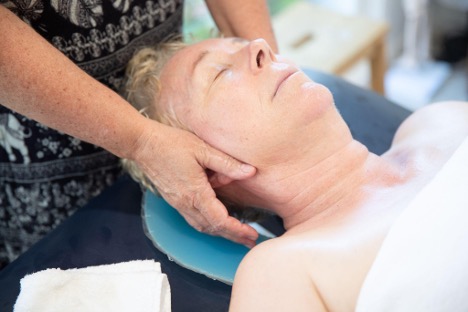
- Hands-on touch
- A TGA certified ABMMA PRO BMT device
- Conductive cream
- TCM wisdom
When applied correctly, BMT stimulates local nerve endings and tissues, improves microcirculation, and supports nervous system balance all without requiring your client to move a muscle.
This is especially promising for clients:
- Recovering from injury or surgery
- Managing chronic nerve-related pain
- Experiencing “mystery pain” with no obvious source
- Who can’t tolerate intense therapies
While BMT doesn’t replace exercise, it supports many of the same outcomes:
- Calmer glial activity
- Reduced inflammation
- Better nerve-muscle communication
- And a restored sense of “safety” in the body
It’s one more way to help the nervous system reset and prevent long-term dysfunction.
A Smarter Way Forward in Pain Care
The science is clear: we can no longer treat pain only by chasing symptoms. We need to work with the nervous system, not just muscles, not just bones.
Understanding glial cells gives us a fresh lens. It invites us to combine hands-on skills with modern tools that work with the body’s own healing intelligence.
At ABMMA, we believe therapies like BMT aren’t just about treating pain- they’re about helping people stay well, bounce back faster, and live with more ease.
Prevention is power.
The future of pain care isn’t just about managing symptoms. It’s about understanding the body as a network and working with it before dysfunction takes hold.
As the science around glial cells evolves, so should our therapeutic approach. Whether through structured movement, mindful touch, or energy-based techniques like BMT, we can help the nervous system relearn safety.
For practitioners, this means expanding the lens. Pain isn’t just physical. It’s neurochemical, cellular, and deeply influenced by how the body processes threat. And the more tools we have to address that, the more empowered we and our clients become.
Reference:
- Vieira, W.F., Real, C.C., Martins, D.O., & Chacur, M. (2025). The Role of Exercise on Glial Cell Activity in Neuropathic Pain Management. Cells, 14(487). https://doi.org/10.3390/cells14070487
- https://accscience.com/journal/GTM/articles/online_first/5029