Non-Invasive & Safe for Patient and Therapist: The Results from RMIT Pilot Study on Bioelectric Meridian Therapy
In a world where chronic pain remains one of the most debilitating and difficult conditions to treat, a growing body of research is shedding light on alternative, non-invasive therapies that challenge the traditional approach. Regarding Bioelectric Meridian Therapy (BMT), a recent randomised, sham-controlled clinical study conducted by RMIT University has found BMT to be safe and well-tolerated, even when compared against placebo-like conditions. These findings mark a significant milestone in the journey to validate complementary treatments through rigorous, evidence-based research.

What is BMT, and how does it work?
Bioelectric Meridian Therapy is an innovative therapy that helps improve general wellbeing, organ health and promotes healing and functional movement. Its efficacy has been noted anecdotally by many clients and patients of practices where the therapy is offered across Australia and internationally through its pioneer, the Academy of Bioelectric Meridian Massage Australia (ABMMA). As a result, it has gained immense popularity over recent years as a sought-out treatment for a wide range of symptoms, ailments and conditions. With its foundations built on Traditional Chinese Medicine, the aim of this therapy is to treat the root cause, rather than just the symptoms.
In practice, BMT uses a bioelectric device (the ABMMA PRO) to generate a small electrical signal which is then transferred into the therapist’s hands. As the practitioner works on the client with their own touch, they have the added power of the bioelectric energy, along with a specially formulated cream that helps unblock the body’s main meridian pathways. In harmony with the body’s natural bioelectricity, the therapist can stimulate nerve cells and increase QI flow (energy), leading to improved blood circulation and immunity, whilst also helping regulate and alkalise the body’s natural levels. The result? Improved bodily functions such as digestion, immunity and recovery.
Putting BMT to the Test: Inside the Clinical Trial
RMIT University concluded it’s randomised, assessor-therapist blinded and sham controlled study on the efficacy and safety of Bioelectric Meridian Therapy on pain. The study aimed to evaluate whether BMT induced analgesia and affected tactile acuity and distal to the treatment site and whether this practice was safe for both therapists and participants.
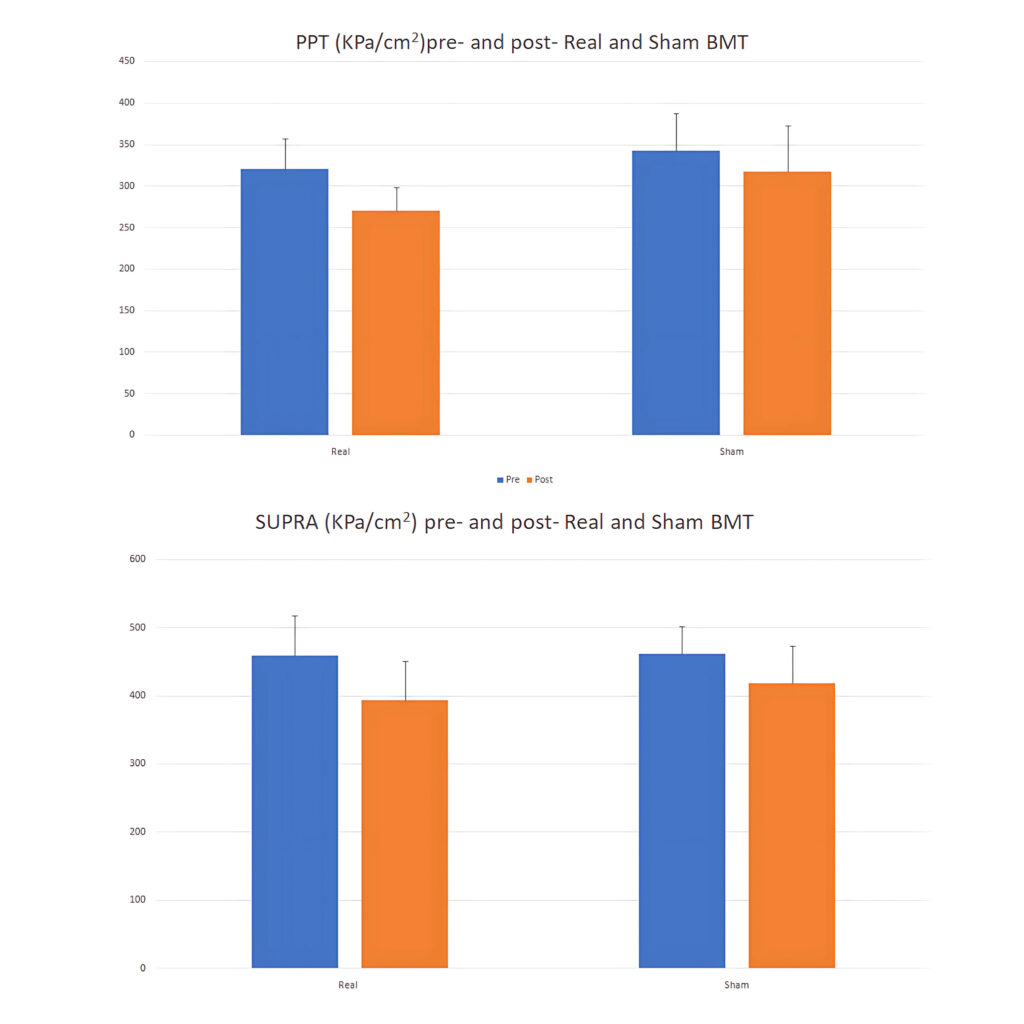
The study was conducted on 30 healthy participants with a randomised cross-over and sham-controlled design. The TGA-approved ABMMA PRO BMT Device was used, in line with the sham device which was simply a device that omitted light without electrical stimulation. The sites on the body that were treated included the back and abdomen. Pressure pain thresholds PPT and suprathreshold SUPRA were measured at calves, lower back, and wrists; two-point discrimination tests 2PDT on lower back and feet; and skin temperature on the lower back, calf, and wrist on one side.
Backed by science: The BMT is safe and effective for both therapist and participants
The RMIT study concluded that BMT was deemed safe for both therapist and participants. Initial blinding was successful; however, participants were able to later distinguish the real device from the sham device during their second visit due to the electrical simulation. It further concluded that BMT does not alter tactile acuity or skin temperature, however as expected, the gentle stroking may cause temporary hyperalgesia immediately after the application.
The results of this pilot study offer more than just optimism for the use of alternative therapies—they provide credible, evidence-based validation for the innovative Bioelectric Meridian Therapy as a safe and effective approach to pain management.
In an era where patients and practitioners alike are seeking drug-free, non-invasive alternatives, this research marks an important step forward. With a foundation built on both traditional principles and modern clinical rigor, BMT is now positioned as a legitimate and promising option for those looking to take control of their pain—safely, naturally, and with confidence.
If you’re a soft tissue therapist or health practitioner looking to incorporate BMT into your practice, you can view ABMMA’s upcoming courses. If you’re a patient seeking BMT therapy, click to find your closest practitioner.